
 Vortex extractor fan: HRV's powerful targeted moisture removal system for laundries and bathrooms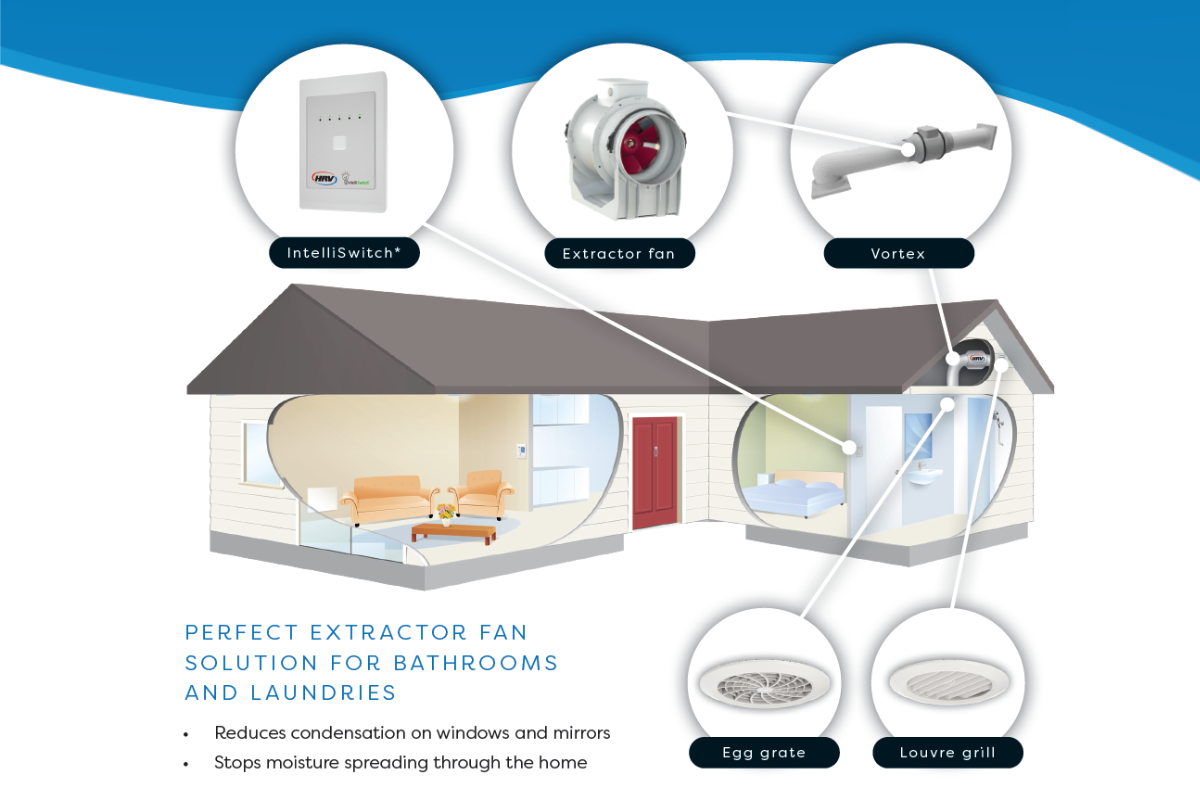
You’ve left your bathroom fan running for an hour after showering, yet the mirror remains completely fogged and the ceiling is still dripping. According to ventilation professionals, most standard hardware-store fans merely stir humid air around the room rather than actually pushing it out.
In practice, these basic units lack the targeted extraction power needed to force heavy, wet air through your ductwork for effective moisture removal. This ultimately leaves your laundry and shower areas highly vulnerable to lingering dampness, musty smells, and eventual mold.
Upgrading to a Vortex extractor fan changes this dynamic entirely. Featuring Smart Air Recycling also known as HRV this system pulls steam outside while transferring your hard-earned warmth back into fresh incoming air, making it the premium bathroom extractor fan NZ homeowners rely on.
The Extraction Myth: Why Your Standard Fan is Failing Your Bathroom
Why does your windowless bathroom stay humid long after a shower, even when the fan roars? Standard models are essentially just small desk fans shoved into a ceiling. They move air easily across short distances but fail entirely when forced to push steam through long pipes a physical hurdle known as ducting resistance.
To actually clear the steam, you need high performance bathroom ventilation systems that build real pressure rather than just stirring the air. Understanding centrifugal vs axial extractor fans comes down to their distinct workload capacities:
- Axial Fans: Spin like basic airplane propellers; they are fine for short, direct wall vents but quickly stall out in long, twisting ceiling ducts.
- Centrifugal Fans: Act more like a vacuum cleaner, creating powerful centripetal suction that actively forces heavy, wet air through extended piping without losing speed.
Loud motors do not guarantee a dry room; what truly matters is the air actually escaping your house. Upgrading to a proper ventilation fan pushes through that resistance, explaining why basic extraction fans always fall short against ducting resistance.
The ‘Tornado Effect’: How Vortex Technology Targets Hidden Dampness
Condensation often lingers on the edges of your ceiling even when the center of the room feels dry. Traditional ventilation merely draws from the space immediately below the vent, leaving stagnant air trapped in the distant corners. These ignored “dead zones” are exactly where trouble starts, making figuring out how to stop black mold in bathrooms feel like a frustrating, endless chore.
The mechanics of a vortex extractor fan completely rewrite these airflow rules. Instead of passively pulling air upward, the system generates a tight, spinning column of pressure that acts like a miniature tornado. This guided centripetal force reaches outward, actively pulling heavy moisture away from your walls and guaranteeing effective steam removal before water droplets can soak into your vulnerable drywall.
Creating this powerful, room-clearing sweep solves the dampness problem beautifully. However, pumping this wet air outside introduces another dilemma: losing your hard-earned winter warmth.
Smart Air Recycling: How HRV Keeps the Heat and Dumps the Humidity
Throwing away comfortable, warm air is the biggest flaw of old-school ventilation. When comparing HRV systems vs standard exhaust fans, the difference comes down to saving your expensive winter heat. Think of Heat Recovery Ventilation (HRV) as a “heat bridge” for your home. As the extractor pulls damp, warm air outside, it takes that heat and essentially “hands it over” to the fresh, dry air coming in.
This smart air recycling delivers noticeable heat recovery ventilation energy efficiency benefits without leaving you shivering in the shower. Instead of forcing your furnace to work overtime replacing lost air, the system saves on winter heating bills by:
- Capturing up to 80% of the exiting room heat.
- Pre-warming freezing outdoor air before it hits your skin.
- Stopping cold drafts that trigger your central thermostat.
Most importantly, the wet and dry air streams never physically mix, improving indoor air quality without pushing stale odors back inside. Preserving that hard-earned warmth while banishing humidity is crucial for maintaining a comfortable, efficient home.
The Laundry Room Challenge: Stopping Mold on Cold Walls and Drying Clothes Faster
Laundry rooms often remain highly humid for hours after the washing machine stops. Hanging wet clothes indoors creates a hidden “microclimate” of heavy, damp air that gets trapped in corners and behind appliances. This stagnant moisture acts like a slow-release sponge, soaking into the paint and turning your laundry area into a prime target for stubborn mold.
To break this cycle, the Vortex fan uses targeted suction to actively pull that heavy dampness out of the room. By continuously refreshing the air, it dramatically reduces drying time for indoor racks while preventing condensation on laundry room walls. Your clothes dry faster naturally, and the surrounding drywall stays perfectly dry to the touch.
Better yet, you never have to babysit the system to get these results. Built-in moisture sensor activated fan controls detect when humidity spikes and automatically engage to clear the room. Achieving this heavy-duty moisture removal relies entirely on how the air is efficiently routed.
Quiet Power: The Benefits of Inline Ducting and Professional Extraction
Instead of a noisy box vibrating directly above your shower, the Vortex system provides a remarkably quiet powerful fan for internal bathrooms by using an “inline” design. The main motor sits safely tucked away in your attic, connected to the ceiling vent via a flexible tube. Moving the engine away from the living space dramatically drops the decibel level, creating a peaceful environment.
Eliminating stubborn dampness first requires calculating bathroom air extraction rates essentially figuring out how many times per hour your room’s total air volume needs completely replacing to stay dry. Once sized, a high-performance setup relies on three vital elements:
- Motor Placement: Mounting the unit deep in the roof space to isolate mechanical sound.
- Proper Sizing: Using wider tubes when installing inline ducting for moisture extraction so airflow never bottlenecks.
- Airtight Seals: Taping every connection to ensure trapped steam doesn’t leak into your attic.
With these components working perfectly together, the system funnels heavy moisture safely outside.
Achieving a Drier, Healthier Home
You no longer have to accept lingering steam and musty towels as normal. Start by checking your bathroom; if the mirror stays foggy long after a shower, your current fan is underperforming. Upgrading is crucial when seeking ventilation solutions for windowless wet areas, where trapped moisture has nowhere to escape.
Switching to a Vortex HRV permanently changes how your house breathes. You stop throwing expensive heat outside while eliminating the damp conditions that feed dangerous black mold. Because they use targeted suction, these are the best fans for high pressure ducting, effortlessly driving heavy air out of your home.
Drying out your space requires the right combination of technology and installation. Contact home ventilation professionals to get a tailored assessment and correct setup, helping you establish a warmer, healthier living environment.
Pair with the IntelliSwitch for programable timer settings. Installation is easy an can be done by a registered electrician.


Online recommendation builder
Find HRV products to suit your home in around 2 minutes.
Get a recommendation